

Article: The New York Neighborhood Series

The New York Neighborhood Series
By NuStory
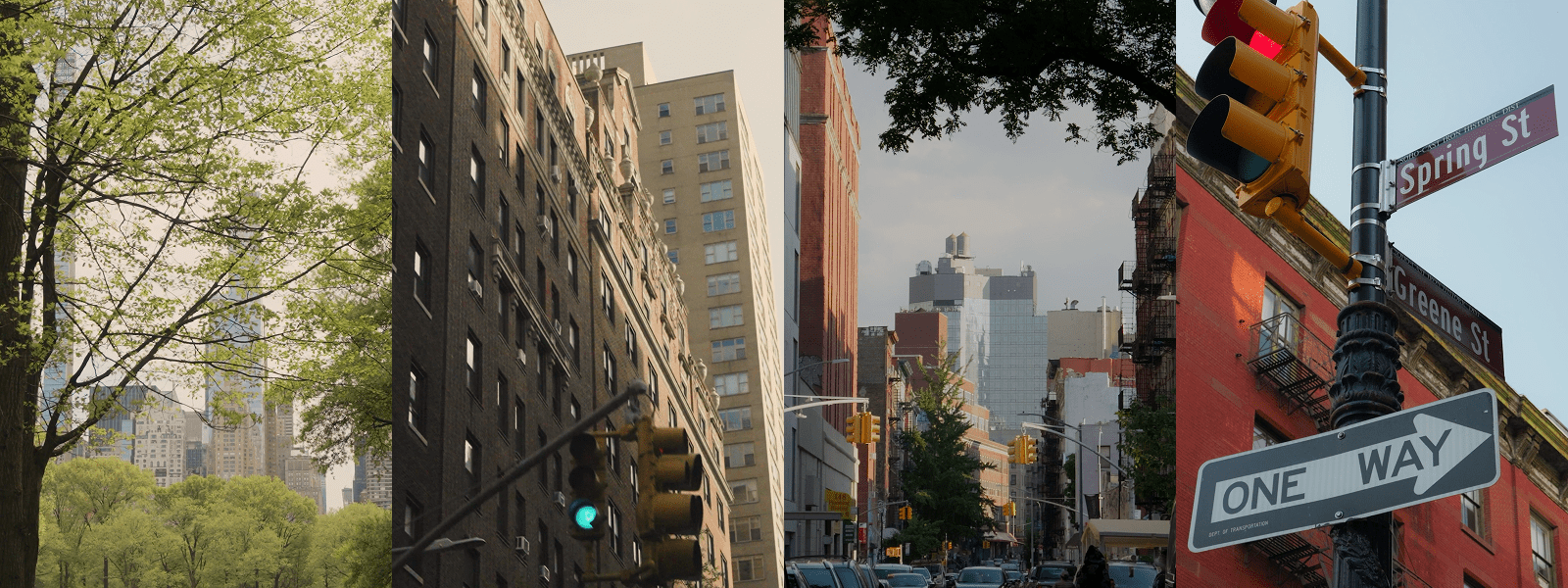
A rug, like a neighborhood, is a matter of character. Some are quiet and assured. Some are layered and a little loud. All of them, the good ones anyway, know exactly what they are. The Neighborhood Series matches each of our designs to the corner of New York it belongs to. We are starting uptown and down, with two neighborhoods that could not be less alike, and two rugs that prove the point.
The Upper East Side
The Upper East Side doesn't chase anything. It has prewar bones, museum light, and doormen who have watched the rest of the city reinvent itself a dozen times without ever feeling the need to follow. Fifth Avenue holds the Met and the Frick. Madison holds its galleries and its florists. The side streets hold their limestone and their quiet, and on a good morning the whole neighborhood smells faintly of Central Park.
It is easy to mistake all this for formality. It isn't. It is confidence, the kind that comes from knowing exactly what you are and seeing no reason to explain it.
The Upper East Side doesn't trend. Neither does Sana.
Sana shares the disposition. Classic construction, a palette that will outlast every trend cycle it politely ignores, and a presence that organizes a room the way a good address organizes a life. It doesn't announce itself. It doesn't have to.
Where it lives best: under a reading chair that gets actual use, in an entry that sees decades of comings and goings, in any room where the art is older than the sofa.
Five stops on the Upper East Side
- The Frick Collection (1 E 70th St). Freshly renovated and still the most civilized way to spend a morning with a Vermeer. Book ahead, the line knows what it's waiting for.
- Bemelmans Bar (35 E 76th St, inside the Carlyle). Ludwig Bemelmans painted the murals, the martinis handle the rest. Go at opening for a seat, or late for the jazz.
- Café Sabarsky (1048 5th Ave, inside the Neue Galerie). Vienna on Fifth Avenue. Order the Sachertorte and let the afternoon go where it wants.
- Albertine (972 5th Ave). A two story French bookshop under a hand painted celestial ceiling. The prettiest place in the city to buy a novel you'll actually read.
- Conservatory Garden (Central Park at 105th St). Six formal acres most New Yorkers have never found. Free, quiet, and reason enough to walk the park's northern end.
SoHo
SoHo was industrial before it was iconic. The cast iron facades were built to hold machinery, then artists, then galleries, then everything else New York decided to pour into them. Cobblestones below, hundred year old columns above, and in between: boutiques next to bodegas, morning espresso lines next to loading docks still doing actual loading.
The remarkable thing is that none of it clashes. SoHo has spent a century absorbing whatever the city throws at it and making the mix look intentional. That is the whole trick of the neighborhood. It gets along with everyone.
SoHo gets along with everyone. So does Simpatico.
Simpatico works the same way. Hand tufted in 100% wool, its geometric pattern echoes the grid of those cast iron facades, and it settles into almost any room and quietly holds it together. It comes in Jade, Taupe, and Ochre, three colorways that read differently in every light, the way a SoHo block does at 8am versus 8pm.
Where it lives best: a loft that mixes eras, a living room with strong opinions, any space where the furniture didn't all arrive in the same delivery.
Five stops in SoHo
- Judd Foundation (101 Spring St). Donald Judd's cast iron home and studio, preserved floor by floor. The best hour of design education in the city, book the tour.
- Balthazar (80 Spring St). The brasserie that never blinked. Steak frites at the bar, or breakfast before the neighborhood wakes up.
- Fanelli Café (94 Prince St). Serving this corner since the neighborhood held machinery instead of galleries. A burger and a beer under the old tin ceiling.
- McNally Jackson Books (134 Prince St). An independent bookstore with a point of view, which in SoHo counts as a public service.
- Dominique Ansel Bakery (189 Spring St). Yes, the Cronut place, and yes, it holds up. The kouign amann is the local's order.
Next stops: Long Island City and Brooklyn
The series continues across the river. Follow along on Instagram or sign up for our emails to catch the next pairings first.
Every NuStory rug is made by hand, trusted by designers, and made to be owned. Explore the full collection →
Read more
How to Choose a Rug the Way a Designer Would
By NuStory There's a reason the rug is always the first thing a designer specifies for a room. Before the sofa is chosen, before the curtains are hung, before a single paint swatch goes on the wall...
Read more